
We Asked Farmers to Draw Their Food Systems.
June 24, 2026
Here is what they showed us.
June 24, 2026
Here is what they showed us.
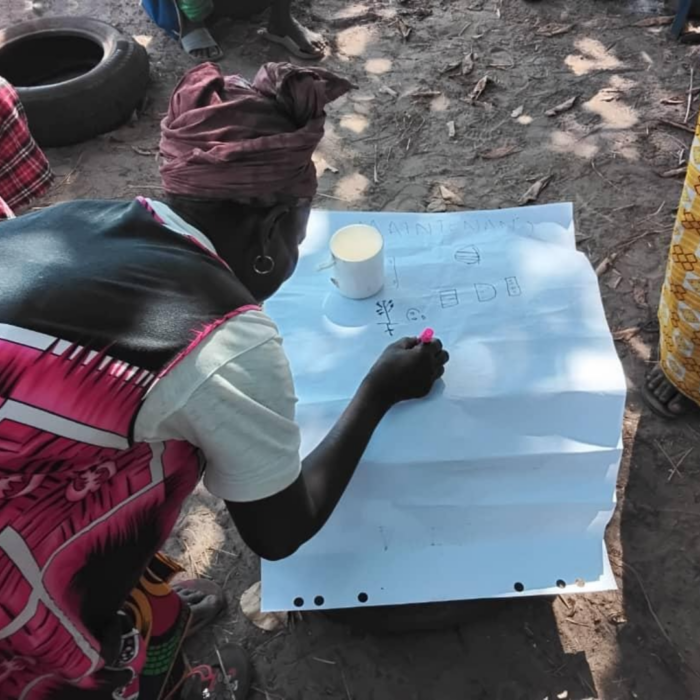
This year, farmer groups across Kenya, Uganda, and Senegal did exactly that. Their drawings offer a unique glimpse into how farmers understand change, what matters most to them, and the futures they are working to build for their families and communities.
Rather than beginning with surveys or indicators, farmers were also invited to answer a simple question: What did your food system look like before, and what does it look like today?
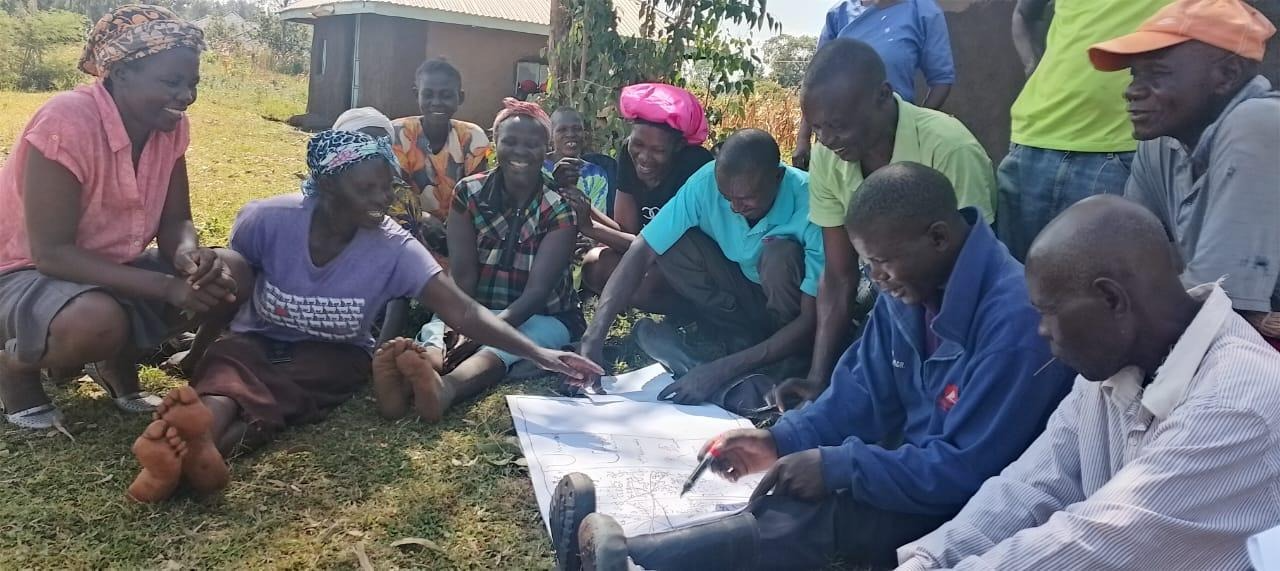
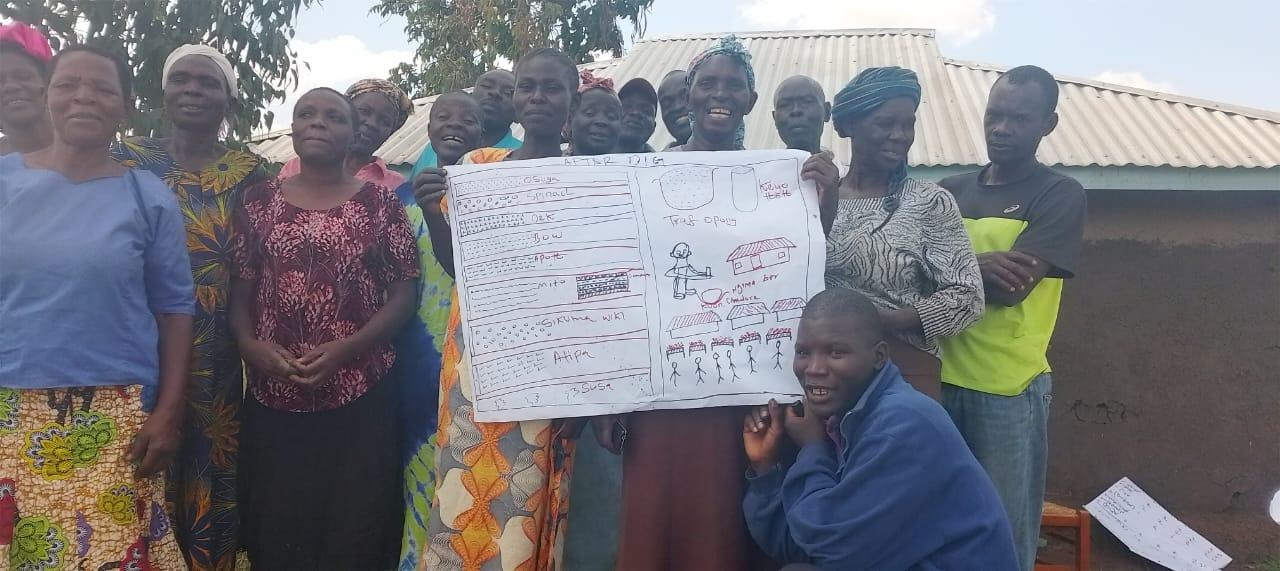
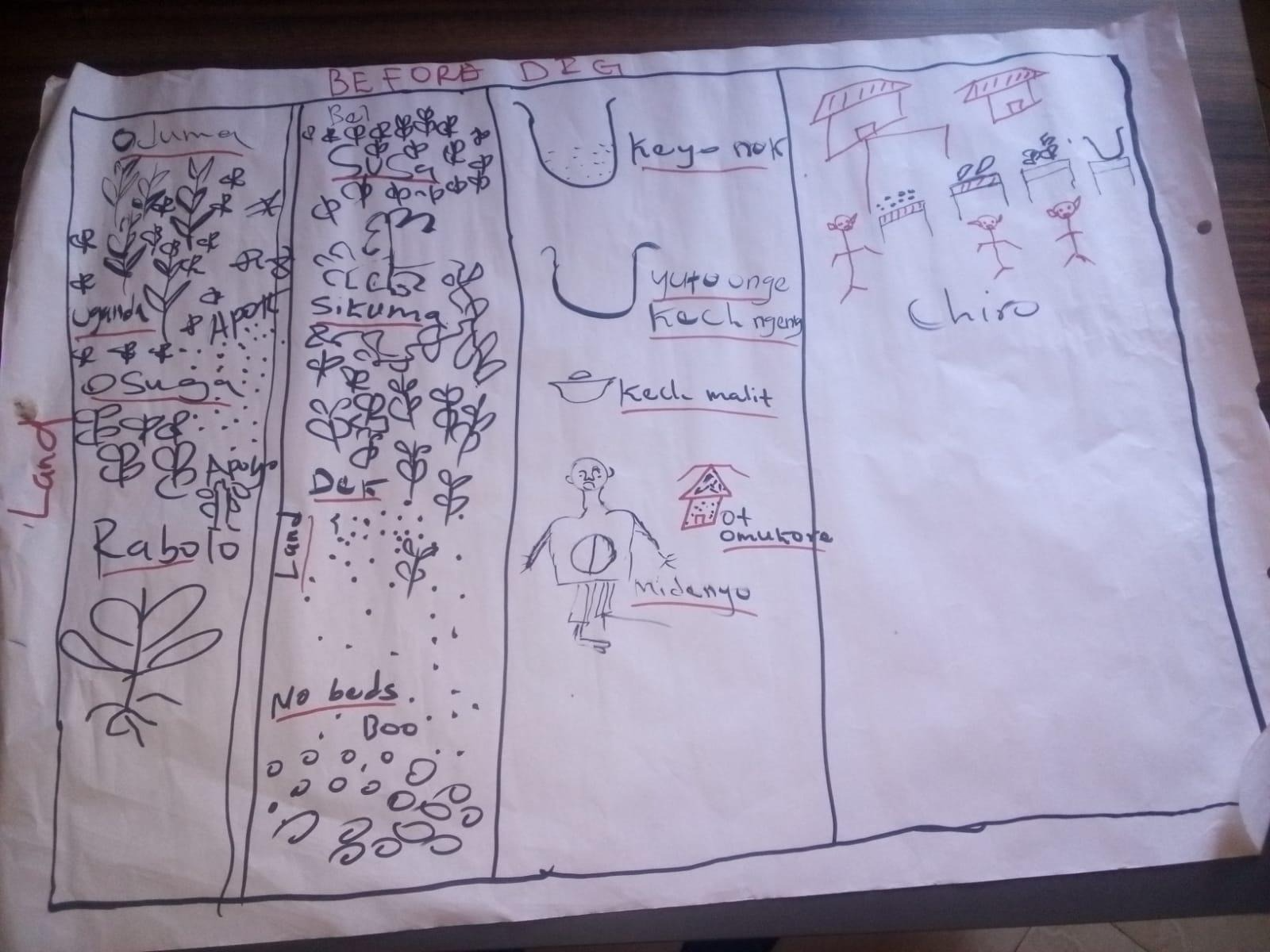
Earlier this year, DIG conducted participatory food system mapping exercises with farmer groups across Senegal, Uganda, and Kenya. In each exercise, a group of farmers collectively created two drawings: one depicting their food system before DIG, and one depicting it now.
Rather than beginning with surveys or indicators, farmers were also invited to answer a simple question:
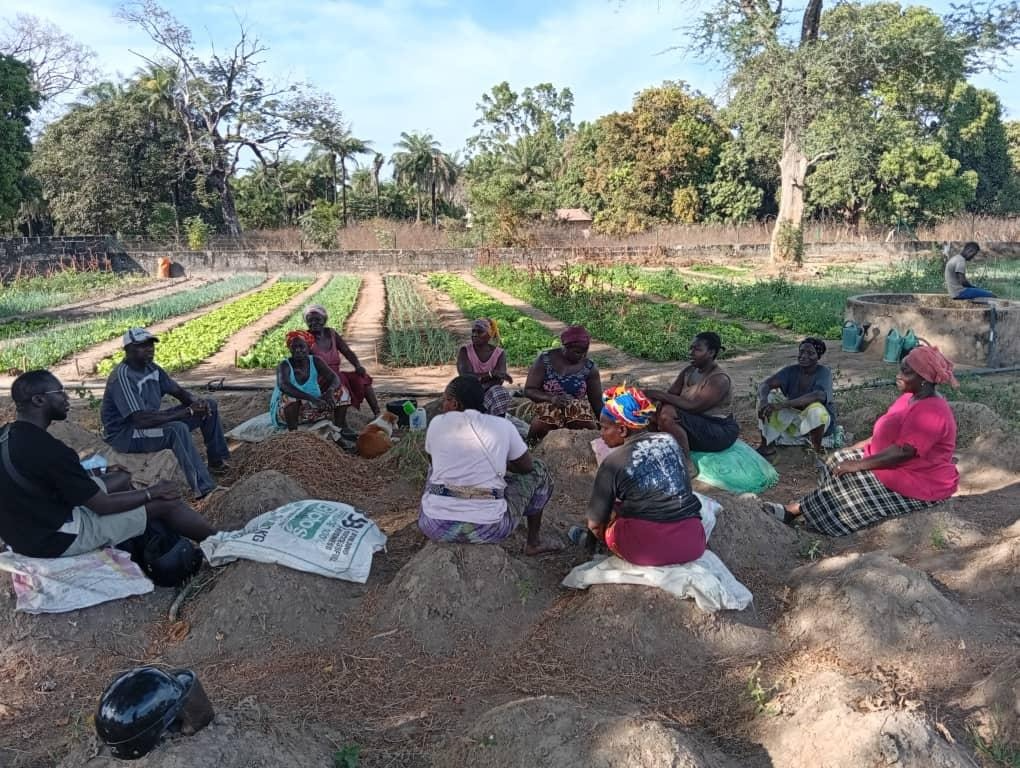
Farmers worked together on the drawings using materials of their choosing. Facilitators asked open-ended questions, recorded farmers’ explanations in their own words, and later translated those responses for analysis.
The purpose of the exercise was not to measure quantitative outcomes. DIG already collects data on food security, crop diversity, income, and other indicators. Instead, these sessions were a chance to see how farmers themselves describe change.
While each community’s story was unique, common themes emerged around producing food, sharing knowledge, participating in local markets, and shaping the future they want for their families.
The summaries below present what six farmer groups chose to draw, discuss, and reflect upon when asked to tell the story of their food systems.
The two Ugandan groups, Kabahenda Tugyere Kumajambere and Mukungu Batwa Tweyombekye, independently drew many of the same scenes when depicting life before.
Both groups drew people performing a full day of paid labor for non-Batwa neighbors in exchange for a single cup of beans. Both drew people kneeling to receive food served on banana leaves because a Batwa person using a shared plate or cup in a non-Batwa household meant that the dish would be set aside or discarded rather than used again by the family. This was not a coincidence, but a reflection of the intense discrimination that the Batwa still regularly experience. Evicted from the forests they depended on, the Batwa have faced economic and social exclusion in Uganda for generations.
“That time was sad and shameful,” one farmer said. “The Batwa were looked at as people who can’t do anything on their own.”
Farmers illustrated gathering forest foods such as ekikwa, harvesting omutembe, and hunting. These were not losses waiting to be recovered by an outside program. They were part of a living knowledge system; the Batwa carried through everything.
When the groups drew their food systems today, gardens appeared throughout the landscape. Farmers drew homes surrounded by vegetables, families harvesting food from their own land, and produce being taken to market. In Mukungu, one drawing showed a Batwa woman seated in the marketplace while non-Batwa customers negotiated to buy her vegetables.
And in both groups, the drawings showed something that may seem small until you understand what it replaced: Batwa and non-Batwa eating together from the same plates.
As one farmer explained:
“Non-Batwa are now buying vegetables from us, giving us money that they used to deny us after we worked for them.”
Another shared:
“Some educated non-Batwa like teachers from a nearby school also come to Batwa homes to seek knowledge on how they can grow vegetables and buy from them.”
When asked whether these changes matter, both groups spoke about respect and relationships. The Kabahenda group said:
When asked what they hope to see next, farmers focused on practical goals: larger gardens, more land, additional crops, livestock, improved housing, and water tanks.
The two Kenyan exercises were conducted with farmer groups in western Kenya: Minya Support Group in Ndhiwa and Ukaford Group.
In the “before” picture, the Minya group drew stunted crops, depleted soil, a pesticide container, an agrovet (a retailer selling seeds, fertilizers, and pesticides), and a market scene showing people buying vegetables rather than growing their own. Members described purchasing seedlings, relying on chemical inputs, and traveling to distant markets for vegetables like cilantro, onion, and green pepper that they did not know how to grow in their own gardens. This dependence on external inputs is widespread across Kenya, and likely reflects decades of policy and extension services that favored purchased seeds and agrochemicals, eroding traditional seed saving and agricultural practices in the process.
As one farmer explained:
The Ukaford group drew fields where crops were planted together without intentional spacing, empty baskets, a plate with a small quantity of food, and a child with a swollen stomach to represent malnutrition.
As one farmer shared:
“Some of us used to plant only two or three vegetables, mostly common ones such as cowpeas and pumpkin. We frequently did not have enough produce, and at times we did not get any harvest at all.”
When the groups turned to drawing their food systems today, the images became noticeably more detailed.
The Minya drew organized raised beds with both exotic and indigenous varieties, including cowpea, jute mallow, crotalaria, and black nightshade, alongside kale, swiss chard, and green pepper. They drew compost, a vendor coming directly to a farmer’s home to buy produce, group members doing table banking (saving and loaning), a well-furnished home, and a vehicle transporting produce to market. Women in the group also described having greater control over household food decisions and spending because vegetables are now available within their own gardens.
As one farmer said:
The Ukaford group drew raised beds planted with vegetables using standard spacing, baskets overflowing with produce, full plates of food, healthy family members, compost, and farmers selling at local markets.
One farmer described the shift plainly:
“I no longer buy vegetables because I have a wide variety growing in my garden. Through the DIG trainings, I have started growing crops such as kale, spinach, black nightshade, and onions, something I had never done before.”
When asked why these changes mattered, farmers spoke about providing for their families from what they grow themselves:
“We no longer rely heavily on agrovet shops for seeds or fertilizer, we can afford household items, our children eat better and are healthier, and we can manage our farms and our lives.”
Looking ahead, members of the Ukaford group said they hope to become community-based facilitators, sharing their knowledge with neighboring farmers. Both groups also expressed interest in strengthening collective marketing, saving more seeds, and ensuring the benefits they have experienced extend to their children and the wider communities.
Exercises were conducted with two farmer groups in the Casamance region: Baghagha and Kadiamor-Bignona.
The Baghagha group drew an empty table, a diakhatou (bitter eggplant) in poor condition, a poorly made garden bed, an empty plate, and a rotten onion. Members described buying almost all their food from the market and having little knowledge of how to grow it.
One farmer said:
“I didn’t know how to successfully grow diakhatou. I cultivated it, but it didn’t produce.”
Another shared:
The Kadiamor-Bignona group used symbolic imagery: a weak hand, an empty calabash, an empty circle representing lack of knowledge, and vegetables that had spoiled before they could be used. Their drawings showed rice and cassava as the primary crops grown by most households, and members described relying on chemical inputs without knowing there were alternatives.
As one farmer reflected:
“I only cultivated rice and corn. The money collected was also invested in purchasing food for family consumption.”
Another said simply:
“I used chemical products, consequently, bad food.”
When both groups drew their food systems today, the images shifted from scarcity to production, learning, and possibility.
The Baghagha group drew a table filled with vegetables, a thriving diakhatou, well-made garden beds, a full plate of food, and a successful nursery. Members described growing more than five crops (tomato, pepper, cassava, batance, hibiscus, okra), consuming them at home regularly, and selling the surplus.
One farmer said:
“I make my own garden beds, I grow my own vegetables, I do self-consumption, and I sell the surplus.”
The Kadiamor-Bignona group drew what they described as a “head full of vegetable knowledge,” alongside gardens filled with diverse crops and a woman carrying vegetables from the garden. Their drawings reflected not only food produ ction but the sharing of knowledge with neighbors.
One farmer explained:
Another reflected on a shift in practice:
“I used chemical products, whereas now I only use organic.”
When asked why these changes matter, both groups returned to the same two themes: knowledge and the ability to meet their families’ needs.
As one farmer put it:
“I have knowledge, skills, and an open mind. I manage to save and meet my family’s needs thanks to selling surplus food.”
When facilitators asked what they would like to see next, the Baghagha group focused on improving irrigation, particularly drip irrigation, to increase production. The Kadiamor-Bignona group described a larger ambition: supplying vegetables to the Bignona market and expanding access to locally grown food across their community.
Stories of how they understand their food systems, the changes they have experienced, and the futures they are working to build.

June 22, 2026
