The Idea That Started It All

Honoring Dr. Salif Sow and the seed he planted 20 years ago.

The Doctor’s Idea That Started It All

5 MIN READ

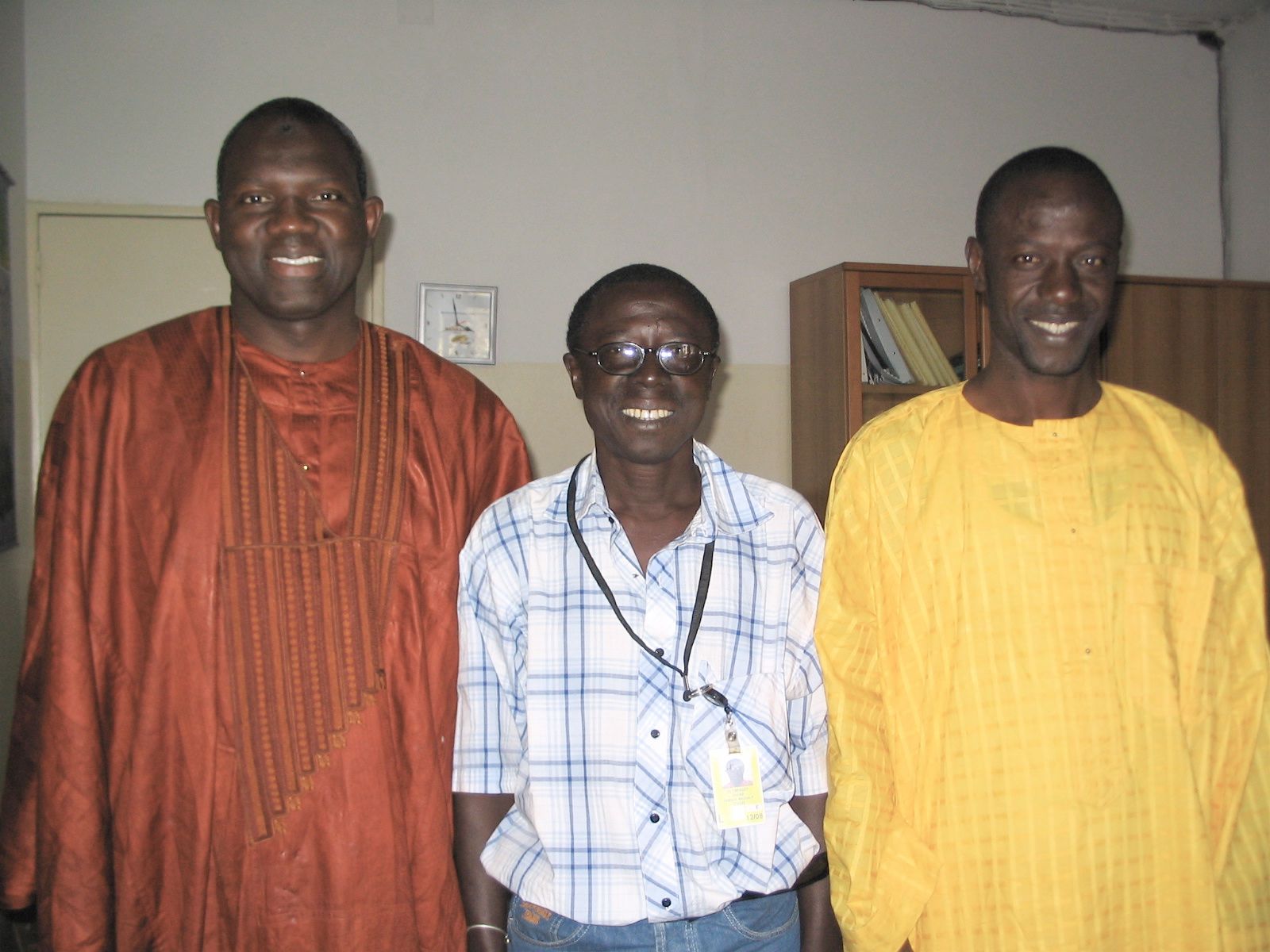
As DIG celebrates 20 years, we find ourselves returning to where it all began: a conversation between a doctor and a patient in a hospital room in Dakar, Senegal. What followed was a lesson in listening. This is the story of Professor Papa Salif Sow, Head of Infectious Diseases at Hospital Fann;  the hospital garden that grew from that conversation; and a partnership that helped shape what DIG would become.

The idea that started it all.

As DIG celebrates 20 years, we are spending time reflecting on the people, partnerships, and ideas that have shaped who we are today.  Our influencers. Our collaborators. Our heroes.

Before there was a DIG, before the many partnerships, DIG’s adaptive programs were developed and honed, the research was published in journals, and before the hundreds of thousands of people were impacted through farmer-led food systems, there was a simple conversation in a hospital room in Dakar, Senegal, in 2004.

And there was a doctor who refused to ignore it.

One afternoon, after rounds had ended, a patient asked if he could speak with him privately.

“Professor,” he told him, “I haven’t eaten for two days.”

For Dr. Sow, the conversation was deeply unsettling. ”I was truly shocked,” he recalled.

He could prescribe antiretroviral medications, he could monitor symptoms, and oversee treatment plans. But what good was any of the treatment if patients lack the ability to receive it?  Maybe the answer was as basic as food and nutrition?

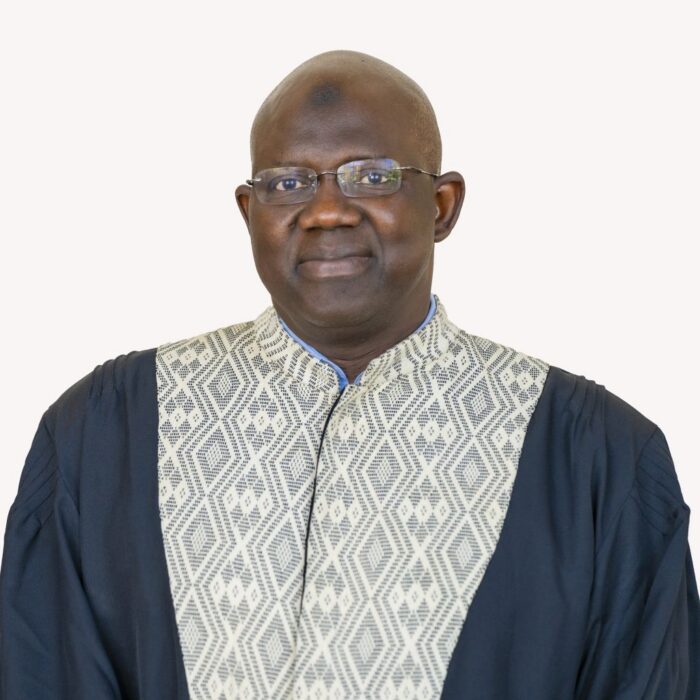
Professor Papa Salif Sow, MD, MSc, is an infectious disease specialist, public health expert, and longtime leader at Fann University Hospital in Dakar. While caring for patients living with HIV and other infectious diseases in the early 2000s, he encountered a challenge that his medical training alone could not solve.

“It was my responsibility as Head of the Department,” he reflected. “I absolutely had to solve this problem.”


Before | Hospital Fann Garden 

A garden behind the hospital.

When he shared his idea with colleagues, many were skeptical.

“Growing vegetables in a hospital? Using hospital space for gardens? Wasn’t food someone else’s responsibility?”

But Dr. Sow now saw the situation differently.

“If we are providing the treatment, but people are not eating and do not have the strength to receive the treatment, this doesn’t make sense.” 

At the time in Senegal, it was a family’s responsibility to provide food for the patient.

Behind the infectious diseases department sat an unused piece of land. With support from hospital leadership and guidance from Senegal’s micro-gardening program, Dr. Sow sought to transform that neglected space into something unexpected: a garden designed to support hospitalized patients.

Steve Bolinger, a Peace Corps volunteer with a specialty in urban agriculture, was invited to the project and worked closely with Dr. Sow.  Coming from a Kansas farming background, Steve brought expertise, introduced new techniques and ideas for planting, and worked daily to help realize Dr. Sow’s vision for a hospital garden.

Dr. Sow remembers:

“After 45 days, we were able to produce vegetables.  At the beginning, 50 kilos per week” went directly into the hospital kitchens to feed patients. Outcomes improved dramatically and immediately.


After | Hospital Fann Garden 

The idea takes root and grows.

In 2006, the lessons learned at Hospital Fann took root in a new setting: the Centre de Traitement Ambulatoire (CTA), the outpatient HIV clinic located on the same campus as Hospital Fann. Building on the success of the original garden, the CTA gave Steve a small grant to build a second garden. This next phase introduced something new: patient participation. The CTA Garden created opportunities for patients to build practical skills and to connect.

The CTA Garden revealed something important: the impact wasn’t just about food and nutrition.

What had started as a solution to one hospital’s problem began to feel like something much bigger: a model that was not only effective, but essential. The need was too great to keep it in one place.

Steve began to explore how to reach more communities facing similar challenges, with gardens based on the same principles: nutrition, community ownership, practical skills, locally-rooted solutions, and giving a safe space for those often stigmatized by their conditions.

As Steve shared his vision of adapting and expanding these approaches to other hospitals, clinics, and communities, Dr. Sow’s response was simple:

“If you have a good idea, the objective is not to keep it for yourself. The idea is to spread it so communities can benefit.”

Steve partnered with Sarah Koch, a fellow Peace Corps Volunteer, to create an organization, and in 2006, inspired by Dr. Sow’s vision, Development in Gardening (DIG) was born.

But this is only one chapter of the story.

As part of DIG’s 20th anniversary celebration, we will be sharing perspectives from others whose experiences, ideas, and partnerships helped shape the organization you know today.

Honoring Dr. Salif Sow

Today, Dr. Sow continues his work in infectious diseases at Hospital Fann as an infectious disease specialist and public health expert. He also serves as President of the Scientific Commission for Strategy and Foresight at the Senegal Academy of Science and Technology.

As DIG celebrates its 20th anniversary, it is impossible to tell the organization’s story without honoring Dr. Sow.

He listened when a patient told him that medicine alone was not enough. And he had vision enough to act.

That instinct, to hear what people are actually saying and take them seriously, is what started it all and, twenty years later, guides DIG still.

Stories, Insights, and Updates from DIG


The Idea That Started It All

Honoring Dr. Salif Sow and the seed he planted 20 years ago.

An RPCV Garden Taking DIG Back To Its Roots

Inspired by a group of returned Peace Corps volunteers, 24 donors came together to sponsor the cost of training an additional DIG group in Ziguinchor, Senegal.

Celebrating Alan Silverman’s Memorial DIG Garden

Thanks to the support of 42 donors who contributed to the Alan Silverman Memorial DIG Garden campaign, featured during DIG’s 2020 Cocktails & Castoffs AT HOME event, DIG was able to serve an additional group in Ziguinchor, Senegal.

View More